

Incubation centre meaning: what it is and how it works
An incubation centre is an organisation that supports early-stage startups with workspace, mentors, common facilities and a route to seed funding until they can stand on their own. In India most are hosted by colleges, research institutes or companies, and many are backed by schemes such as SISFS, NIDHI and the Atal Innovation Mission.
By Akshay Kendurkar, CEO, MyStartupValley
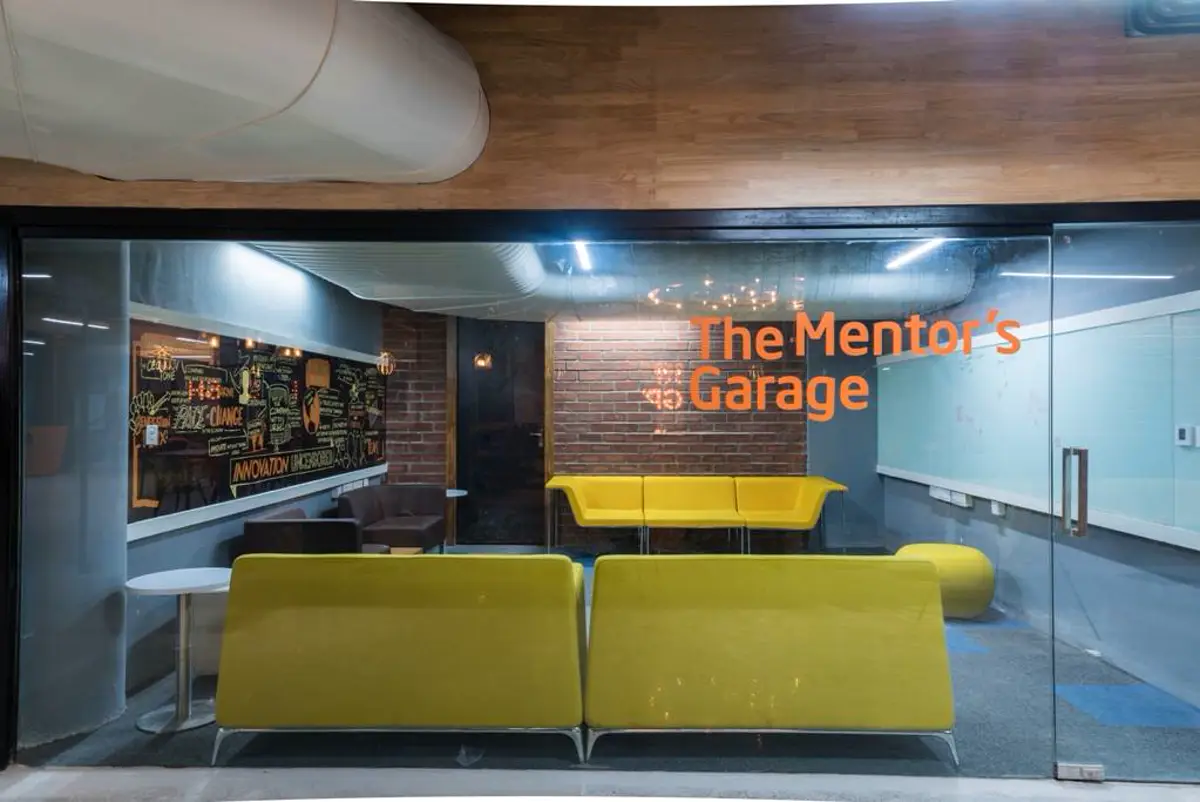

An incubation centre is an organisation that helps early-stage startups through their first years by giving them workspace, mentors, common facilities and a route to seed money. It takes in founders with an idea or a prototype and works with them for a set period. Then it expects them to leave as companies that can raise funds or sell on their own.
In India the term covers a college incubation cell, a technology business incubator (TBI) at a research institute, an Atal Incubation Centre and a company-run programme. This guide explains what they have in common, how one works from intake to exit, and where the money comes from.
What does incubation centre mean?
Incubation centre means a place and a programme for young startups. It offers a desk or a lab, a team that runs the programme, a pool of mentors and access to grants or seed funds. "Incubator" means the same thing. A technology business incubator (TBI) is the name DST uses for the centres it funds.
The Startup India Seed Fund Scheme spells out what a centre should provide. Its guidelines list physical infrastructure, support for testing and validating ideas, mentoring for product development, and help with finance, human resources and legal compliance.
The same guidelines expect incubators to arrange networking with investors and chances to showcase their startups at national and international events. A centre that offers only desks is a co-working space, not an incubator.
How does an incubation centre work?
An incubation centre works in five steps. It selects startups through an open call and takes them through a programme of support. It gives them mentors and space, helps them reach seed funding, and agrees in writing when and how they leave. The centre sets each step itself, within the rules of any scheme that funds it.
| Step | What happens | Where it is written down |
|---|---|---|
| Intake | An open call, a review against published criteria, then an interview or a pitch | Selection rules; under SISFS, an Incubator Seed Management Committee selects |
| Programme | Workshops, milestones and regular progress reviews | The programme plan |
| Mentors and space | Desks, labs, mentor hours, help with compliance | The facilities list and mentor panel |
| Funding | Scheme grants, seed investment, introductions to investors | Scheme guidelines and the centre's seed fund rules |
| Exit | Graduation, or leaving when the residency period ends | The incubation agreement |
Intake shapes everything after it. Many centres also run a pre-incubation track for founders who have an idea but no company yet. Our guide to pre-incubation vs incubation explains the difference and who funds each stage.
Scheme rules leave a lot to the centre. DST's NIDHI-TBI page says each TBI signs an agreement with its incubatees that defines the residency period and the exit policy. It adds that NIDHI-TBIs can generally incubate at least 30 ventures at a time, with labs, meeting rooms and co-working space for them.
What is an incubation programme?
An incubation programme is the structured support a startup gets while it is inside the centre. It is a sequence of phases, milestones and reviews that runs from onboarding to investor readiness and graduation. The centre is the organisation; the programme is what it runs for each new intake of startups.
A typical programme mixes three kinds of help. Workshops cover what every founder needs, such as company law, accounts and pitching. Mentor hours give one-to-one advice from people who have built or funded companies. Reviews check progress against the milestones the startup agreed at entry.
Length and phases vary by centre and sector. Our guide to incubation programme structure sets out the phases, how long each runs and which milestones to track.
Who runs incubation centres in India, and how many are there?
Most incubation centres in India are hosted by colleges, universities, research institutes and government bodies, and a growing number are run by companies. There is no single national count. Each scheme counts the centres it supports. According to a PIB backgrounder of 9 November 2026, those counts run from 51 under MeitY's TIDE 2.0 to 518 in the MeitY Startup Hub.
Incubators supported by central schemes, as of late 2026
The same backgrounder says the Seed Fund Scheme has approved Rs 775.67 crore for 4,194 startups across 32 States and UTs through 244 incubators. A June 2026 PIB backgrounder adds 72 Atal Incubation Centres, which have supported over 6,700 startups.
Many institutions sit on several of these lists, so the counts cannot be added up. Our note on the number of incubators in India explains the overlap scheme by scheme.
Companies run incubators too. Bengaluru's CloudSEK opened applications in October 2026 for a 12-week incubator for 10 cybersecurity startups, as StartupFeed reported. Its programme page lists four stages: apply, meet the team, build, and a demo day with investors and customers.
With Launchpad, we want to share what we have learned and help promising founders get to their first ten paying customers.
For a college, the road to a working centre is longer than it looks. See our plan for how to start an incubation centre in college.
How do incubation centres fund startups?
Incubation centres fund startups mainly by passing on government scheme money as grants, convertible debentures or loans, and by introducing startups to angel investors and venture funds. At a glance, the three central routes are DPIIT's Seed Fund Scheme, DST's NIDHI programmes and the Atal Innovation Mission's incubation centres. Each has its own limits.
| Route | Run by | What the centre can receive | What a startup can get | A rule for the centre |
|---|---|---|---|---|
| Seed Fund Scheme (SISFS) | DPIIT | Grant of up to Rs 5 crore | Up to Rs 20 lakh grant for proof of concept; up to Rs 50 lakh as convertible debentures or debt | Operational for at least two years, with seats for at least 25 people |
| NIDHI-SSS | DST | Up to ₹1000 lakh | Up to ₹100 lakh as seed support | NIDHI-TBIs generally hold at least 30 ventures at a time |
| Atal Incubation Centre | Atal Innovation Mission, NITI Aayog | Grant-in-aid of up to Rs 10 crore over a maximum of 5 years | Set by each centre | At least 10,000 sq. ft. of built-up space for the centre |
SISFS adds more conditions: an incubator must have at least 5 startups in physical incubation when it applies and a full-time chief executive. No more than 20% of the grant to an incubator may go to startups as grants, under para 8.2 of the scheme guidelines. The rest goes out as investment through convertible debentures or debt.
Startup India Seed Fund Scheme money (Rs crore)
An incubation centre is judged by what its startups do after they leave, not by the size of its building.
How is an incubation centre different from an accelerator or a co-working space?
An incubation centre works with earlier startups for longer. An accelerator runs a short, fixed cohort for startups that already have market validation, and it usually ends with a demo day. A co-working space rents desks and offers no programme, mentors or funding route. All three can sit in one building and still do different jobs.
DST's NIDHI-Accelerator, for example, is usually a 3 to 6 month fast-track programme run through existing TBIs for startups ready to scale. Our comparison of incubators and accelerators in India covers duration, equity and selection.
How does a startup leave an incubation centre?
A startup leaves an incubation centre when it graduates or when its residency period ends. Graduation is the point at which a startup meets the milestones set at entry. Indian scheme rules leave the details to each centre. NIDHI asks every TBI to define the residency period and the exit policy in its agreement with the startup.
Graduation usually means the startup has a product in the market, revenue or outside funding, and no longer needs a subsidised desk. Exits work best when they are written down at entry, so founders know what counts as done.
Funders read the exits closely. SISFS assesses incubators that apply on the number of startups graduated, the number that raised follow-on investment and the 2-year survival rate of startups from the date they joined.
Editorial note: every figure in this guide was checked against its linked source in November 2026.
Questions
What is the meaning of incubation centre in simple words?
An incubation centre is an organisation that helps new startups grow by giving them workspace, mentors, common facilities and a route to seed funding for a fixed period. In India it is often hosted by a college, a research institute or a company, and many are backed by government schemes.
What does an incubation centre do for startups?
It selects early-stage startups through an open call and runs a programme of workshops, mentor hours and milestone reviews. It gives them a desk or a lab, helps them use grants such as the Seed Fund Scheme, introduces them to investors and agrees in writing when they will graduate or leave.
Is an incubation centre the same as an incubator?
Yes. Incubation centre and incubator mean the same thing in Indian usage. Government schemes also say technology business incubator, or TBI, for centres funded by the Department of Science and Technology, and Atal Incubation Centre for those funded by the Atal Innovation Mission.
How many incubation centres are there in India?
There is no single official count. According to a PIB backgrounder of 9 November 2026, the Seed Fund Scheme works through 244 incubators, the MeitY Startup Hub supports 518 and DST's NIDHI has supported over 200 TBIs. Many centres appear on more than one of these lists.
How long does a startup stay in an incubation centre?
There is no fixed national period. DST's NIDHI rules ask each technology business incubator to define the residency period and the exit policy in its agreement with the startup, so the length depends on the centre, the sector and the milestones agreed at entry.
Sources: PIB backgrounder, National Entrepreneurship Day, 9 Nov 2026 · PIB backgrounder, Empowered Youth, Stronger Nation, 13 Jun 2026 · DPIIT, Guidelines for Startup India Seed Fund Scheme · DST, NIDHI-TBI programme page (checked 19 Nov 2026) · DST, NIDHI-Accelerator programme page, updated 22 Jun 2026 · PIB backgrounder on startup schemes, 15 Jan 2026 · Atal Innovation Mission, Atal Incubation Centres page (checked 19 Nov 2026) · CloudSEK, Launchpad programme page (checked 19 Nov 2026) · StartupFeed, CloudSEK Launchpad applications open, 29 Oct 2026
For more on running an incubator in India, read the MyStartupValley blog or see MyStartupValley for incubators.