

Startup event ideas that founders and investors attend
Startup event ideas that founders and investors attend include pitch nights, founder circles, investor office hours, demo days, seminars, conferences, E-Summits, meetups, sector roundtables, reverse pitches and hackathons. Choose by who you serve and what they should leave with: small recurring formats build trust, while large yearly events build reach.
By Akshay Kendurkar, CEO, MyStartupValley
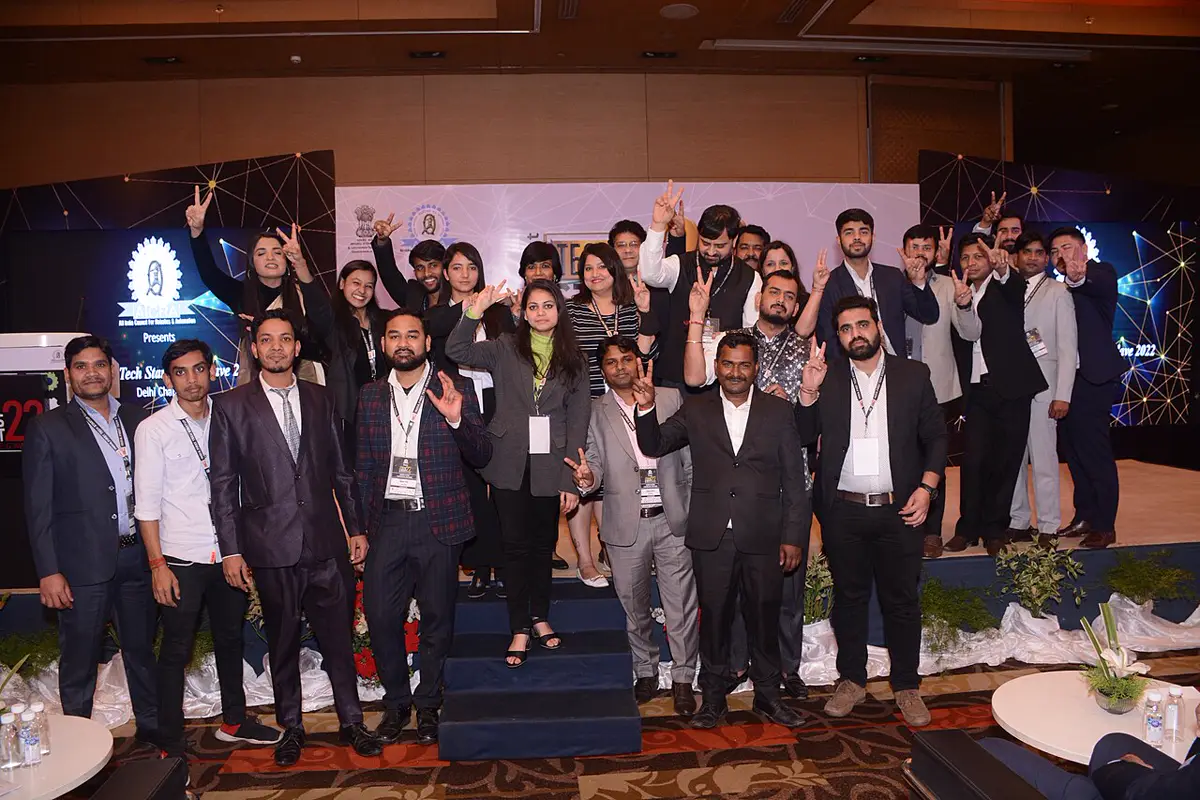

Organisers rarely run out of event ideas. They run out of attendees, usually because every event looks the same: a panel, a few pitches and an hour of loose networking. Founders stop coming when they leave with nothing, and investors stop coming when the room has no startups they could back.
This guide lists eleven startup event formats, who each is for, how big it should be, what attendees get and how often to run it. It is written for organisers at incubators, E-cells, communities and accelerators who want a calendar people come back to.
Which startup event ideas do founders and investors actually attend?
Founders and investors attend events that give them something specific: feedback, introductions, deal flow or peers at the same stage. The formats that deliver this are the pitch night, founder circle, investor office hours, demo day, seminar, conference, E-Summit, meetup, sector roundtable, reverse pitch and hackathon.
Investors in particular go where trusted deal flow is. In a survey of 885 venture capitalists, over 30 percent of deals came through professional networks and 20 percent were referred by other investors, while only 10 percent came inbound from founders, according to the NBER summary. That is global research, but it explains why a small room of reviewed startups draws investors more reliably than a large open one.
DPIIT-recognised startups by state, as on 30 June 2026
Which startup event format suits which audience?
Each format serves a different audience and goal, so choose by who you want in the room and what they should leave with. The table below sets out who each format is for, a typical size, what attendees take away and a sensible cadence.
Sample planning table: sizes are typical ranges for planning, not rules.
| Format | Who it is for | Typical size | What attendees get | How often |
|---|---|---|---|---|
| Pitch night | Early founders and angels | 4 to 6 startups, a room of 30 to 60 | Feedback and introductions | Monthly |
| Founder circle | Founders at a similar stage | 6 to 10 founders | Peer advice under confidentiality | Monthly |
| Investor office hours | Founders preparing to raise | 1 investor, 4 to 8 slots | Direct, diligence-style questions | Monthly or once per cohort |
| Demo day | Investors and a finished cohort | 8 to 15 startups, 50 to 150 guests | A view of a whole cohort and first meetings | End of each cohort |
| Seminar or workshop | Founders who need one skill | 20 to 60 | A practical skill, such as cap tables or compliance | Monthly or quarterly |
| Conference | The wider ecosystem | 300 or more | Talks, reach and visibility | Yearly |
| E-Summit | Students, faculty, alumni and investors | Several hundred to a few thousand | Competitions, talks and first exposure | Yearly |
| Meetup | Founders and builders, with a few investors | 30 to 80 | Conversations and new contacts | Monthly |
| Sector roundtable | Investors and founders in one sector | 12 to 20 | Depth on one sector's issues | Quarterly |
| Reverse pitch | Startups hearing corporates or investors | 3 to 5 presenters, 40 to 100 startups | Access to a buyer's real problem | Twice a year |
| Hackathon | Developers, students and early teams | 50 to 500 | A working prototype and new teammates | Yearly or twice a year |
Which events bring investors into the room?
Investors come to formats where they see reviewed startups or meet founders one to one: the demo day, pitch night, investor office hours, sector roundtable and reverse pitch. Each gives an investor a clear reason to spend an evening, such as a cohort to compare or a sector to go deeper on.
A demo day shows a whole cohort at once, and the guide to running a demo day covers the run sheet. Office hours let one investor test several founders with real diligence questions. A sector roundtable gathers a dozen or so people around one industry's problems, which suits investors who specialise.
Our guide to startup event formats investors attend compares these in more depth. Whatever the format, keep the room to reviewed startups, send investors the list of startups a few days ahead, and invite them personally.
Which events help founders between fundraises?
Founder circles, meetups and seminars help founders most when they are not raising. They offer peers, practical skills and contacts, and they keep founders in your community between pitch events. That steady contact is how trust in an organiser is built.
Peer groups have evidence behind them. In a randomised study of 2,800 firms whose managers met monthly in small groups for a year, the meetings raised firm revenue by 8.1 percent, and managers passed on more useful information when they were not competitors, per the NBER working paper. It is not an Indian or startup study, but it supports the design. See how to run a founder circle for size and rules.
A recurring startup meetup works as the front door to your community, and seminars work when each one teaches a single practical skill. Pick the topic from what founders asked about at the last meetup.
When is a conference or E-Summit worth the effort?
A conference or E-Summit is worth it when you need reach: putting your community, incubator or institution in front of many founders, students, sponsors and investors at once. It takes months of work, so run it once a year and let smaller recurring events carry the relationships.
For colleges, the E-Summit often has policy behind it. The Ministry of Education's National Innovation and Startup Policy 2019 says networking events must be organised so that budding entrepreneurs can meet investors and pitch, and warns that events should not become an end goal. Our six-month E-Summit plan covers the work.
Hackathons sit in the same yearly slot for many colleges. They produce prototypes and teams rather than investor meetings, so pair them with a pitch round or a pre-incubation call if you want ideas to continue.
How often should you run each kind of event?
Run small formats monthly, mid-sized formats quarterly and large formats yearly. A workable calendar for one organiser is a monthly meetup or pitch night, a monthly founder circle, quarterly sector roundtables and one large yearly event, with a demo day at the end of each cohort.
Fixed slots matter more than frequency. A pitch night on the last Saturday of every month is easier to attend than a better event on random dates. Our guide to running a pitch night covers the monthly rhythm in detail.
Small events build trust; large events build reach. A calendar needs both, in that order.
How do you pick your first startup event idea?
Start with the format that serves the audience you already have. If you have founders but few investors, begin with a meetup or founder circle. If you have a cohort, plan a demo day. If you have investor relationships, run office hours. Move to larger formats once a recurring event is full.
Whichever you choose, write down what attendees should leave with and collect only the registration details you will use, with a form such as the startup event registration form template. Then measure the same few things every time: attendance, return visits and introductions made.
Questions
What startup event ideas suit a college E-cell?
A college E-cell can run a monthly founder talk or workshop, an ideation or pitch competition, a hackathon and a yearly E-Summit. Small recurring events build a community of student founders, and the E-Summit gives reach. Link each event to pre-incubation so good ideas have somewhere to go next.
Which startup events do investors attend?
Investors attend events with reviewed startups or one-to-one time: demo days, pitch nights, investor office hours, sector roundtables and reverse pitches. Keep the room small, send investors the startup list with a line on each before the event, and invite them personally rather than through a public post.
How often should a startup community host events?
A workable rhythm is small formats monthly, such as a meetup, pitch night or founder circle, mid-sized formats like sector roundtables quarterly, and one large event a year. Fixed slots, such as the last Saturday of each month, matter more than frequency for repeat attendance.
What is a reverse pitch event?
In a reverse pitch, corporates, government departments or investors present a problem or an investment focus to startups, instead of startups pitching to them. Startups then apply to solve the problem or to meet the presenter. It suits organisers who can bring buyers with real problems and budgets.
Sources: NBER Digest, How Do Venture Capitalists Make Decisions? (Gompers, Gornall, Kaplan and Strebulaev), 30 Nov 2016 · NBER Working Paper 22951, Cai and Szeidl, Interfirm Relationships and Business Performance, Dec 2016 · Ministry of Education Innovation Cell, National Innovation and Startup Policy 2019 for Students and Faculty, 2019
Plan your next event on MyStartupValley Events: see startup event management and startup meetup registration. More organiser guides are on the MyStartupValley blog.